Day 24: Message Headers & Metadata
Building StreamSocial’s Distributed Tracing & Feature Flag System
What We’re Building Today
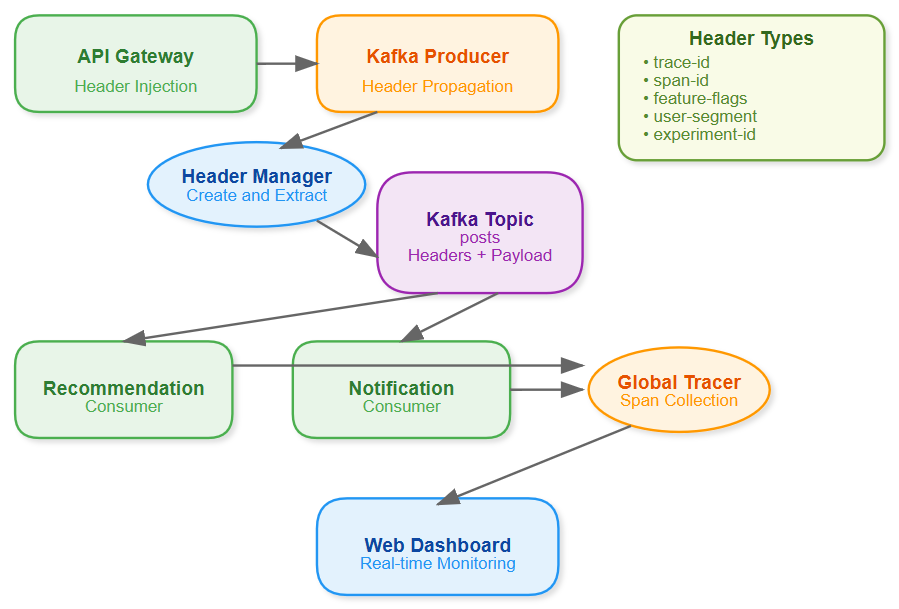
Today we’ll implement Kafka message headers to power StreamSocial’s distributed tracing and A/B testing infrastructure. You’ll build a system that tracks user requests across microservices, propagates feature flags, and enables real-time experimentation.
Target Components:
Header-based distributed tracing system
Feature flag propagation mechanism
A/B testing framework integration
Metadata enrichment pipeline
Part 1: Understanding Message Headers
Core Concepts: Message Headers & Metadata
Message headers in Kafka are key-value pairs attached to each record, separate from the actual message payload. Think of them as HTTP headers - they carry metadata without affecting the core data.
Why Headers Matter: Headers enable cross-cutting concerns like tracing, authentication, and feature flags to flow seamlessly through your event-driven architecture without polluting business data.
Production Usage Patterns:
Distributed Tracing: Correlate requests across 20+ microservices
Feature Flags: Toggle features without redeploying services
A/B Testing: Route users to different experiences dynamically
Security Context: Propagate authentication tokens safely
Context in StreamSocial System Design
In our social media platform, every user action (posting, liking, commenting) triggers events that flow through multiple services. Headers let us track these journeys and experiment with new features safely.
Current Week’s Integration: Building on our graceful shutdown patterns from Day 23, we’re adding observability and experimentation capabilities that survive service restarts and deployments.
System Position: Headers sit at the messaging layer, enabling horizontal concerns across all StreamSocial microservices without tight coupling.
Part 2: Architecture Deep Dive
Component Architecture